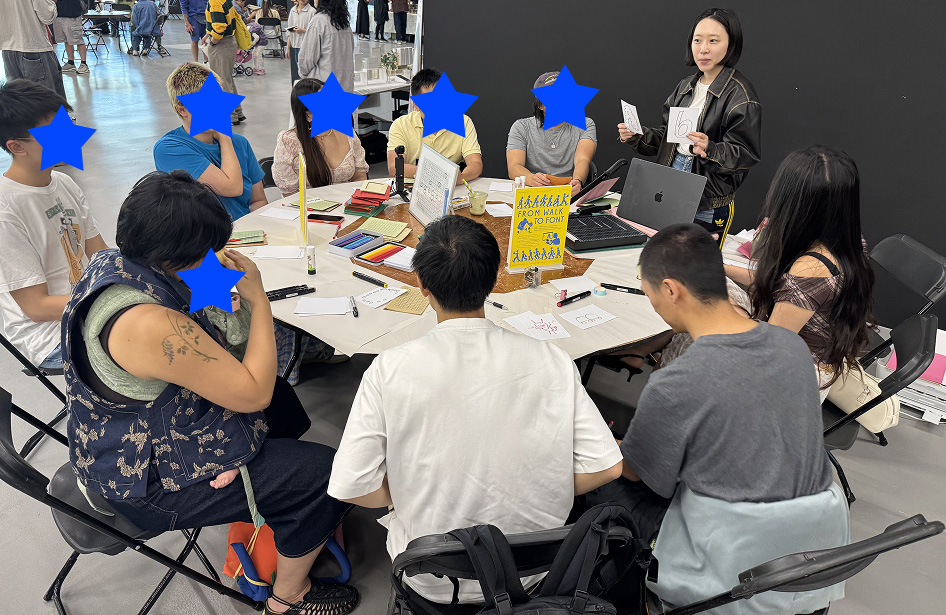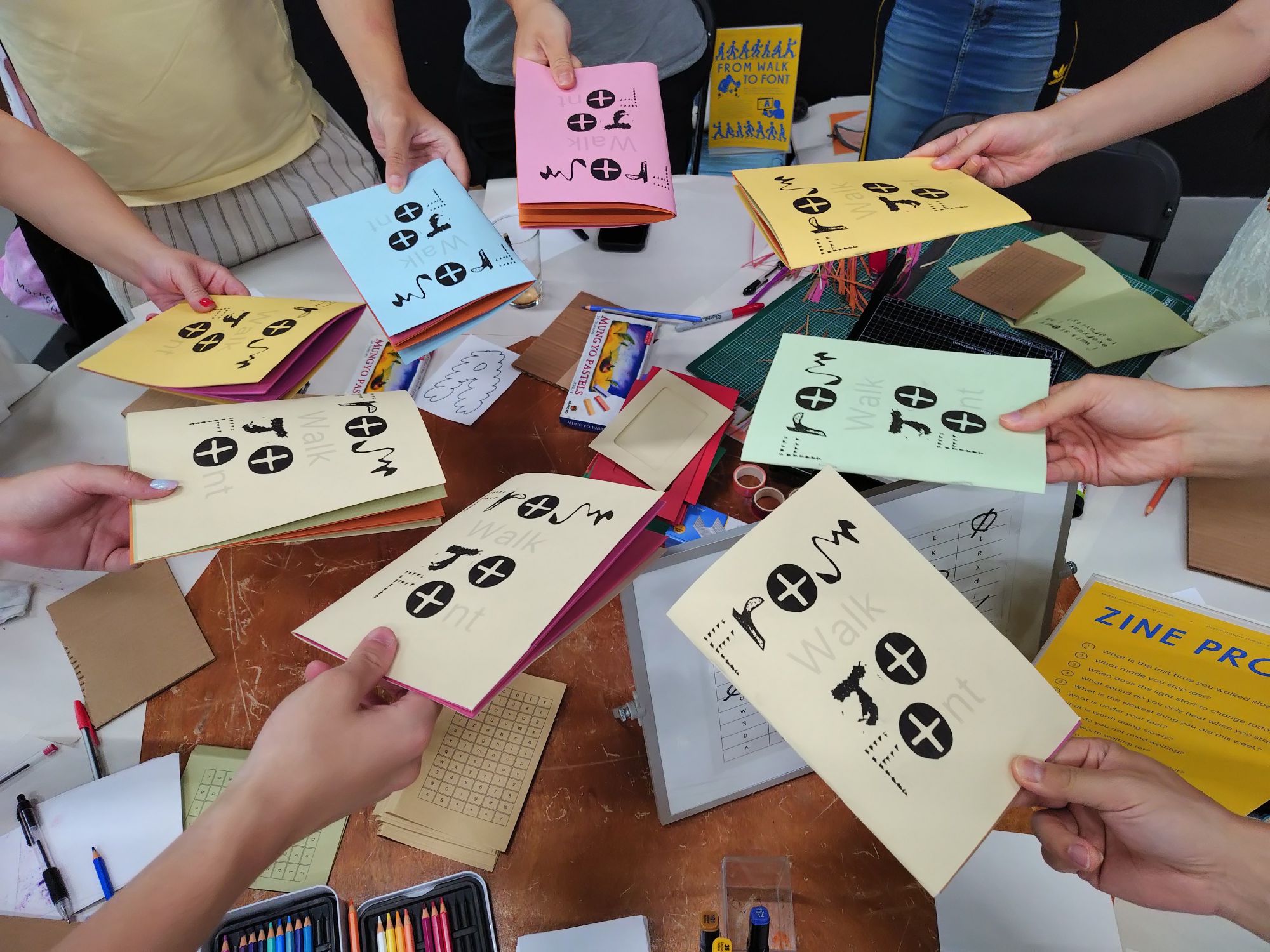
Workshop participants holding up their printed From Walk to Font zines around a table of art supplies

From Hand to Font

Role
Workshop Facilitator · Front End Developer
Timeline
Jul – Oct 2026 · 3 months
Project Type
Solo Project
Project Overview
Summary

This is a passion project I started to practice my AI and front-end coding skills while contributing to the community. It is a community-based project that invites non-designers to create their own fonts.

Participants draw the alphabet by hand, and their drawings are converted on the spot into a typeable digital font. As a token of gratitude for participating, each participant receives a zine that is also printed on site.

Venue Partners

Thank you to Market Root, Rhizomatic, Create Space London, Kindred Studio, Bremen Zine Festival, Tagore’s Salon (ACE Lottery fund), and Glasgow Zine Library for accepting my proposal and providing venues and relevant materials.

Market Root
Rhizomatic
Create Space London
Kindred Studios
Bremen Zine Festival
Tagore’s Salon
Lottery funded. Supported using public funding by Arts Council England
Glasgow Zine Library
Keywords
Community
Using new tech to bring community into one.
Typography
My interest with graphic design background.
Onsite Photos
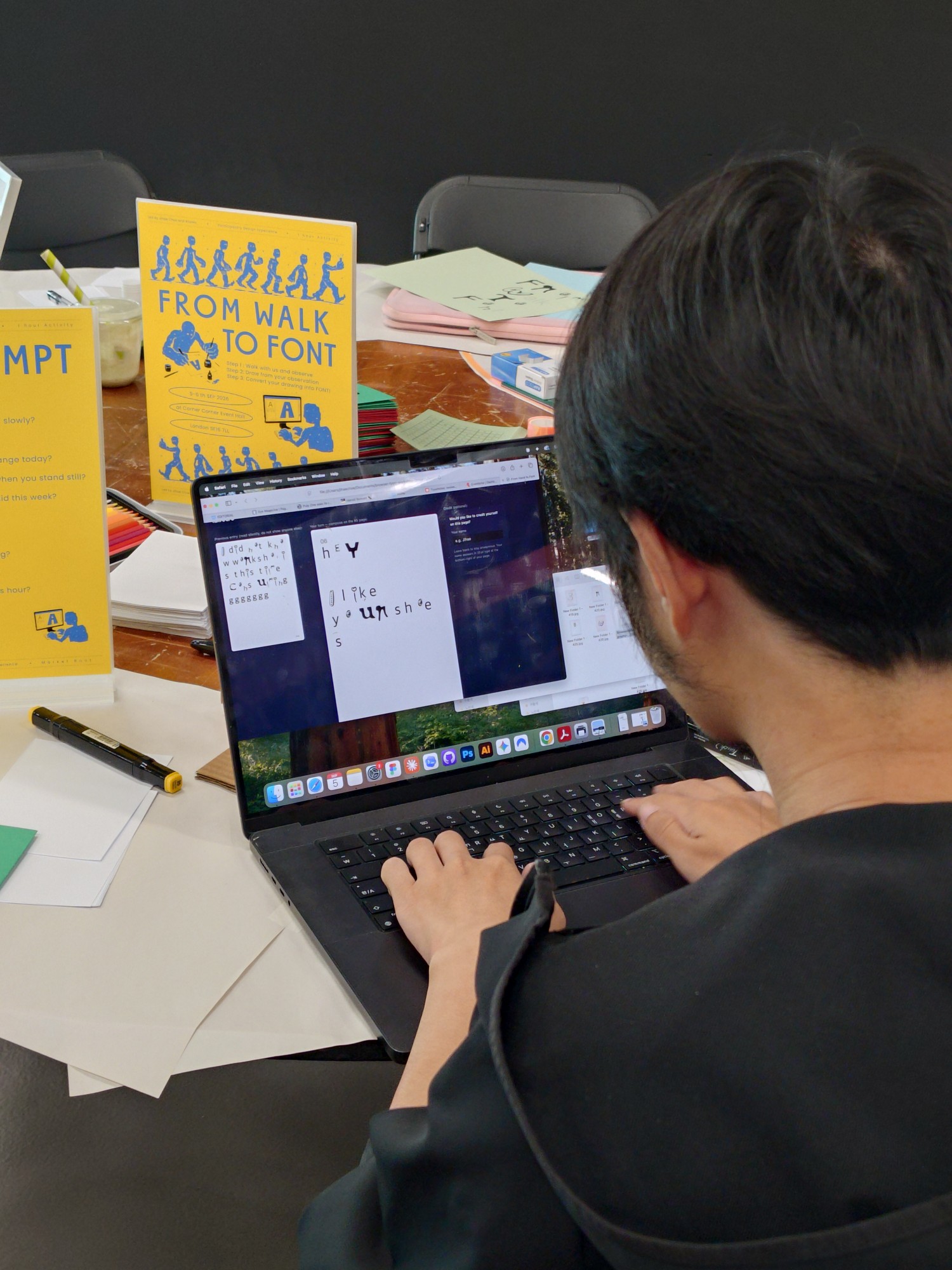
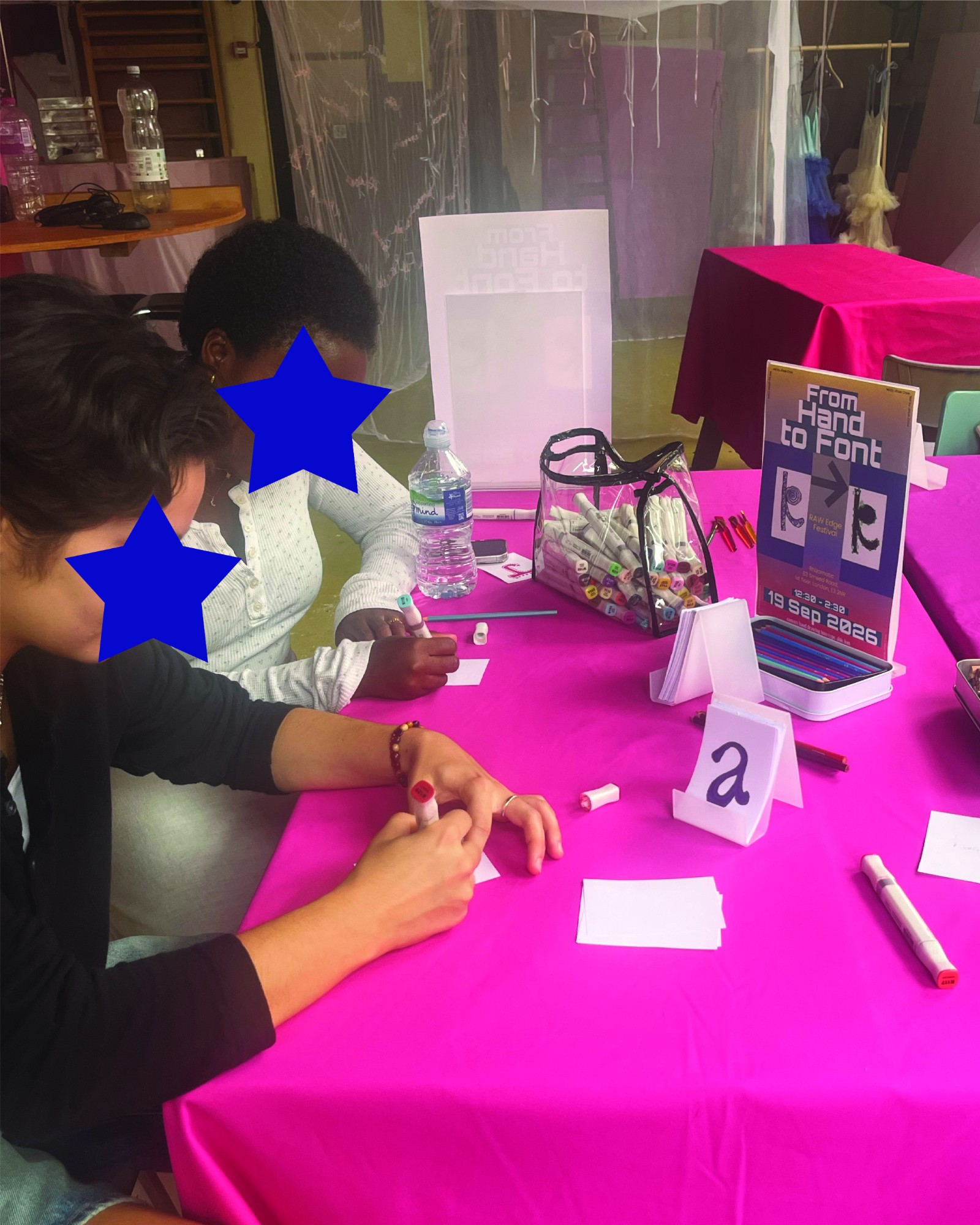
Participants around a round table during a workshop session while a facilitator stands holding up letter cards A participant typing with the hand-drawn font on a laptop, next to From Walk to Font posters Two participants drawing letters with markers on small cards at a pink table, beside a From Hand to Font poster
User Testing
AimIdentify usability barriers during live workshops
MethodIn-context moderated usability observation + post-session field notes
Participants27 participants across 4 workshop sessions
DurationEmbedded within 90-minute workshops
Finding 01
Making the next step easier to find
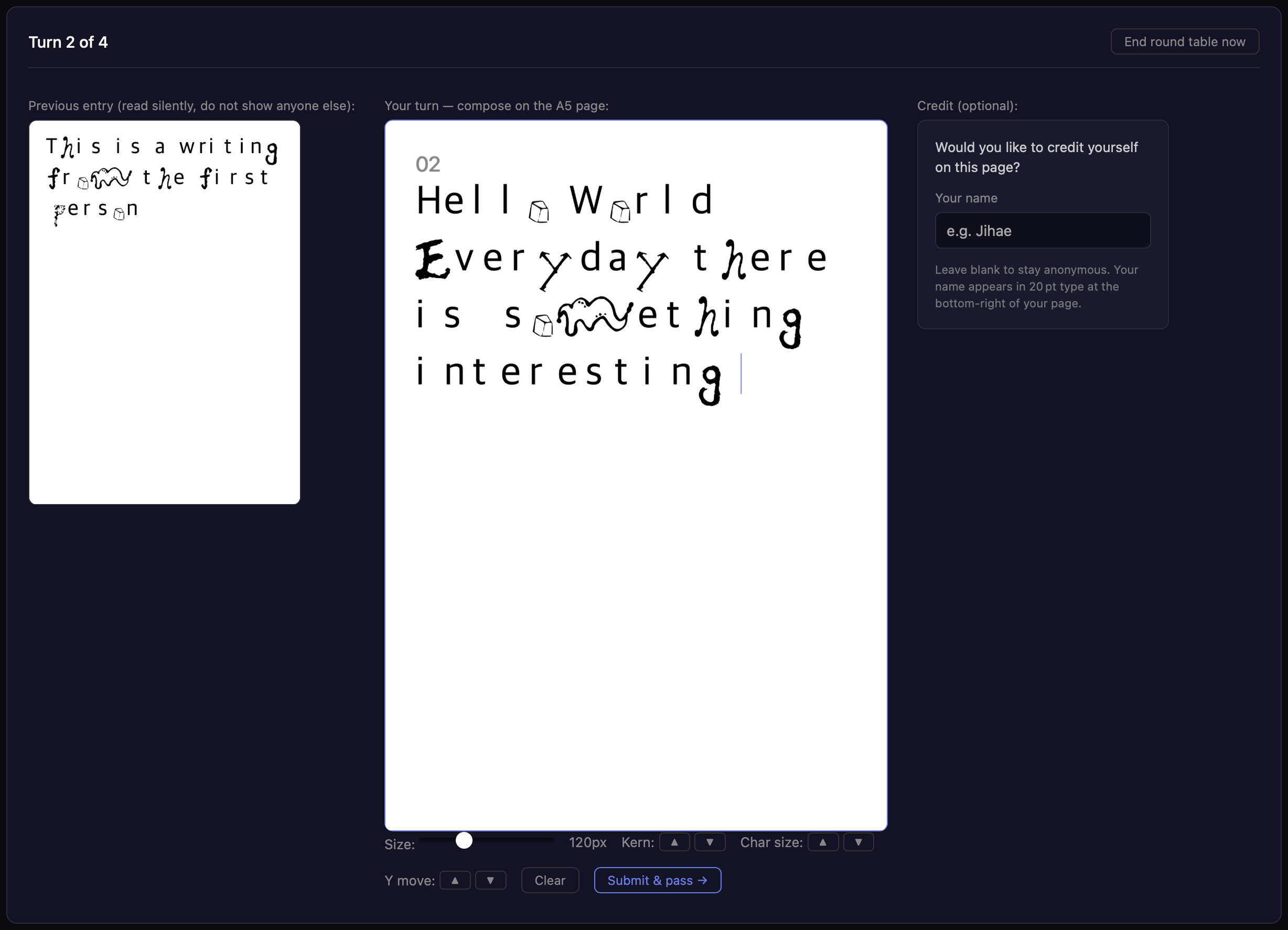
FindingParticipants repeatedly needed guidance to locate “Submit & pass.”
ChangeRepositioned the primary action beside the canvas.
Outcome1/6 participants identified the submit action independently after the redesign.
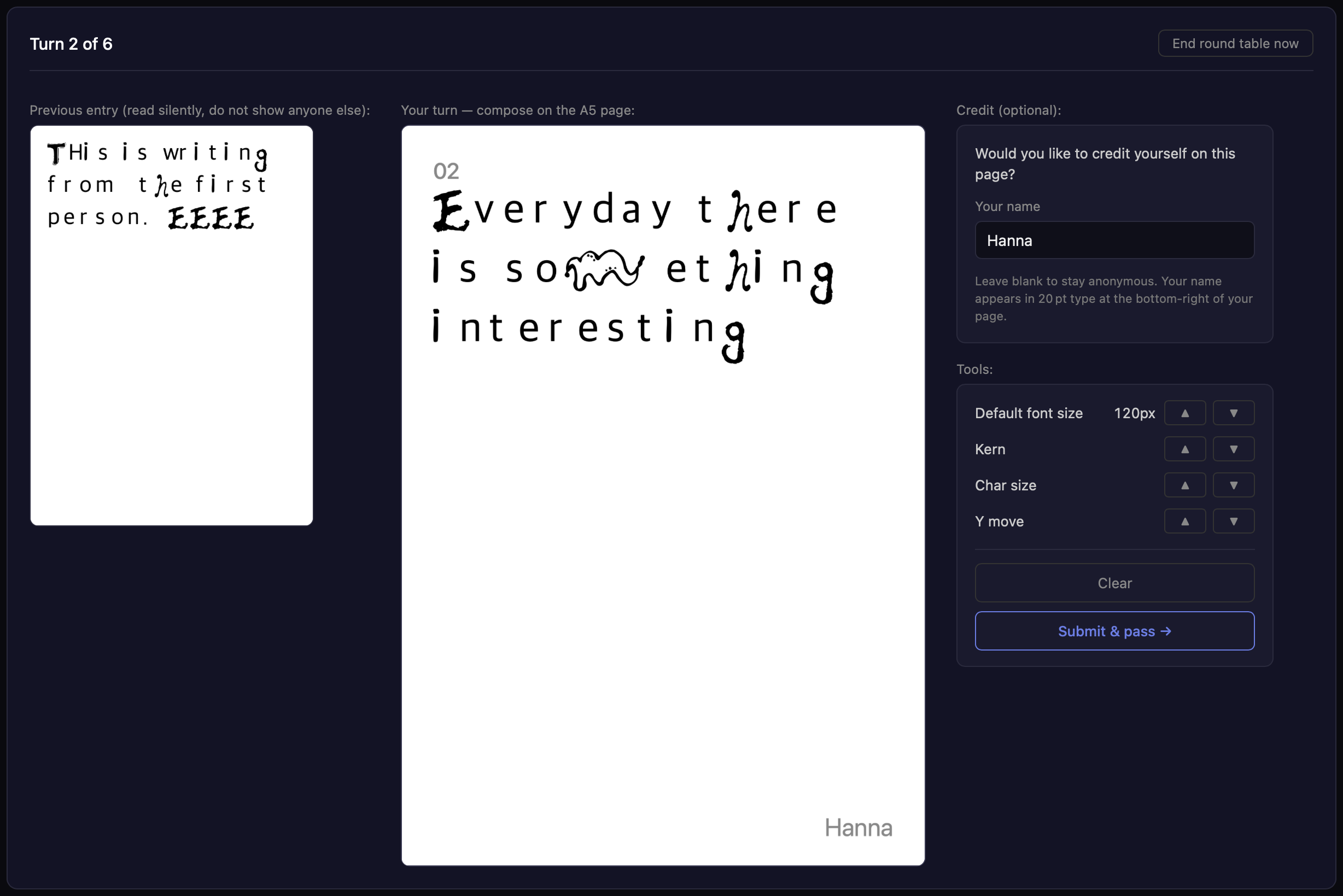
After
Edited round-table screen: the tools move into a panel beside the A5 page, and the credited name appears on the page
Before
Original round-table screen: a size slider and kerning, character size and Y-move buttons sit under the A5 page
Finding 02
Turning waiting time into creative time
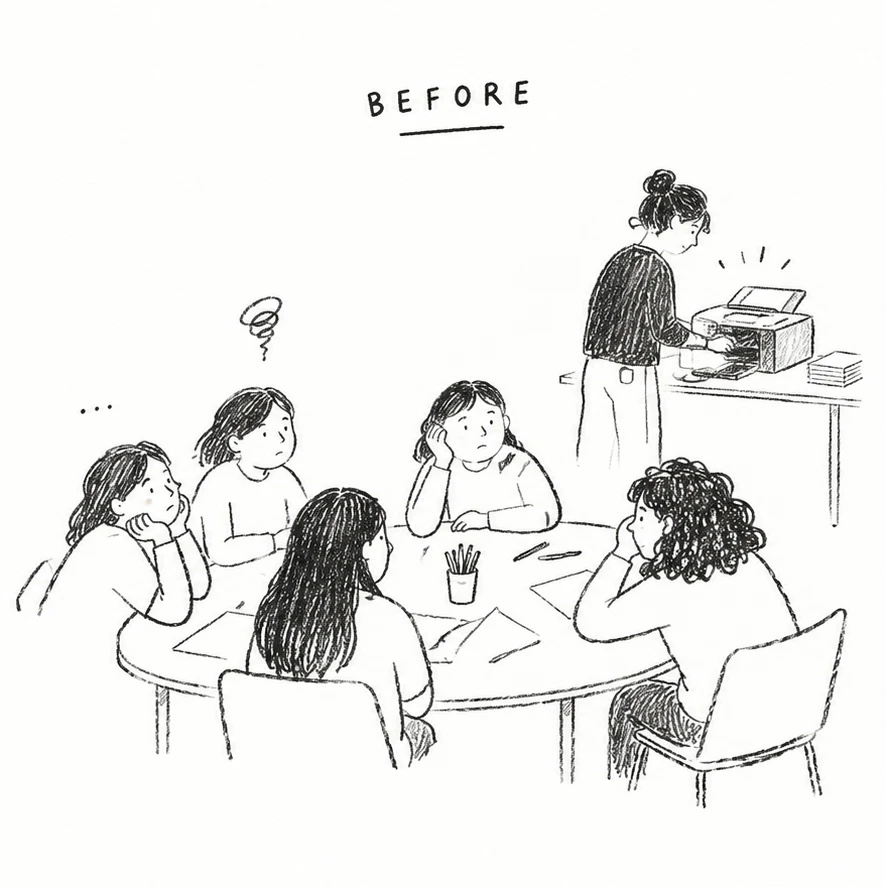
FindingAn average of 12 minutes of downtime occurred during printing.
Before
  1. Introduce myself
  2. Participant draw AlphabetI upload it on laptop
  3. Print
  4. Bookbinding
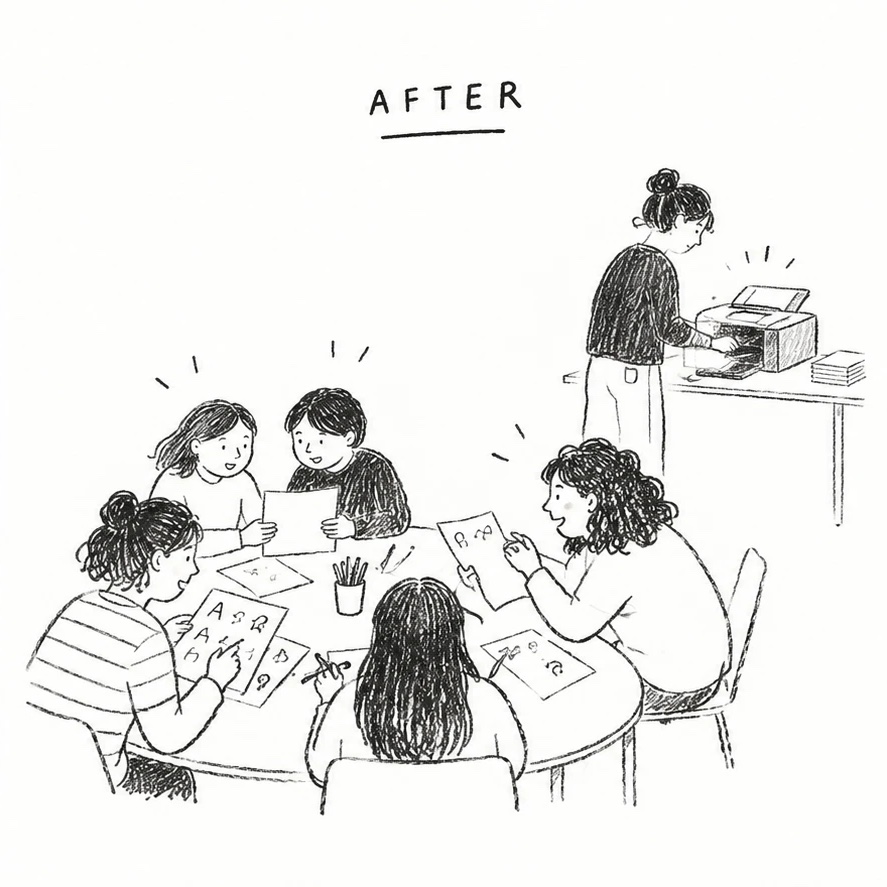
ChangeAdded a typography activity to fill the printing downtime.
After
  1. Introduce myself
  2. Participant draw AlphabetI upload it on laptop
  3. Print (prepared activity)
  4. Bookbinding
Outcome4/6 participants had no downtime; 2/6 waited only 3–4 minutes.
Illustration, before: participants sit idle at the table while the facilitator prints.
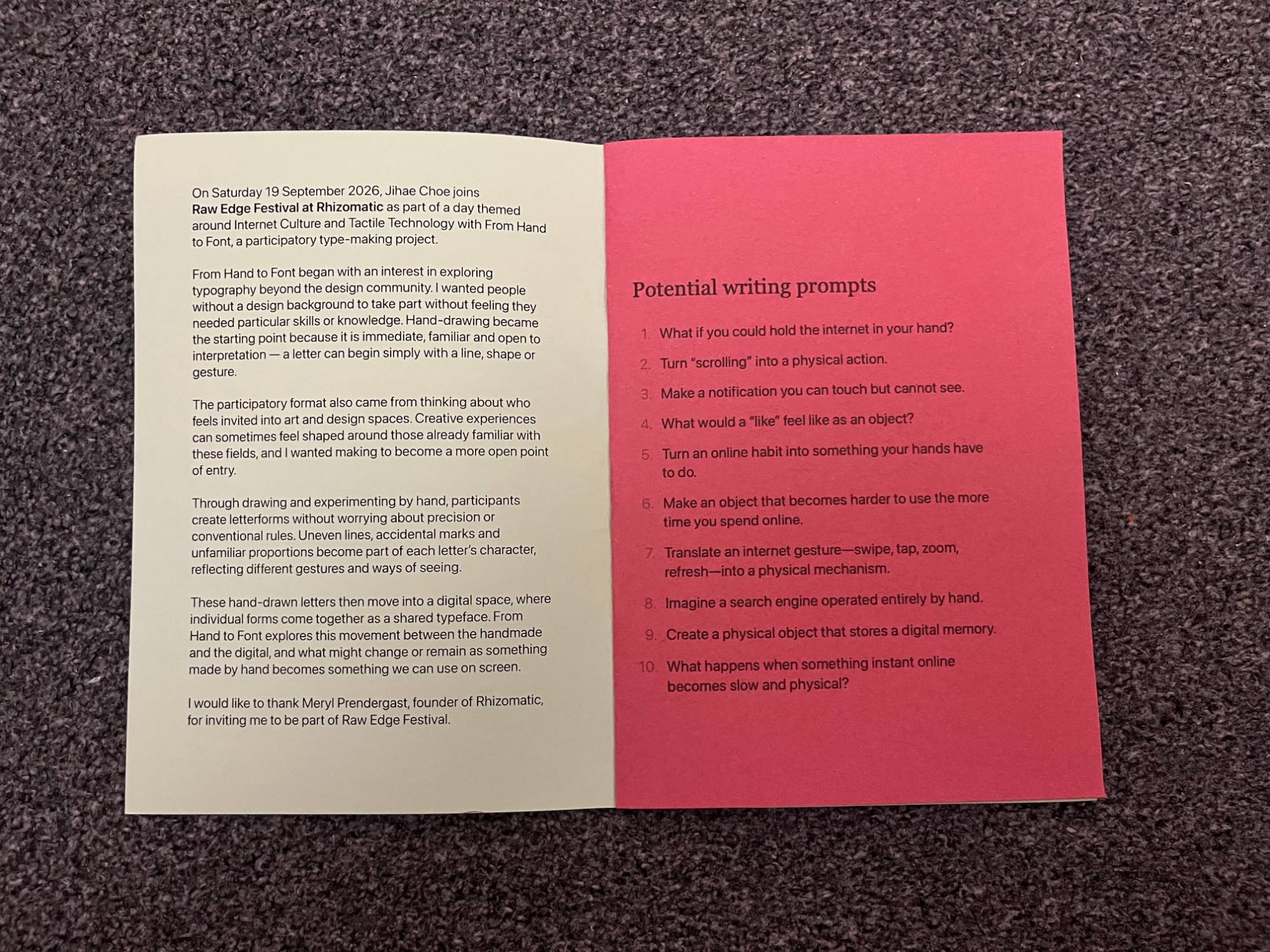
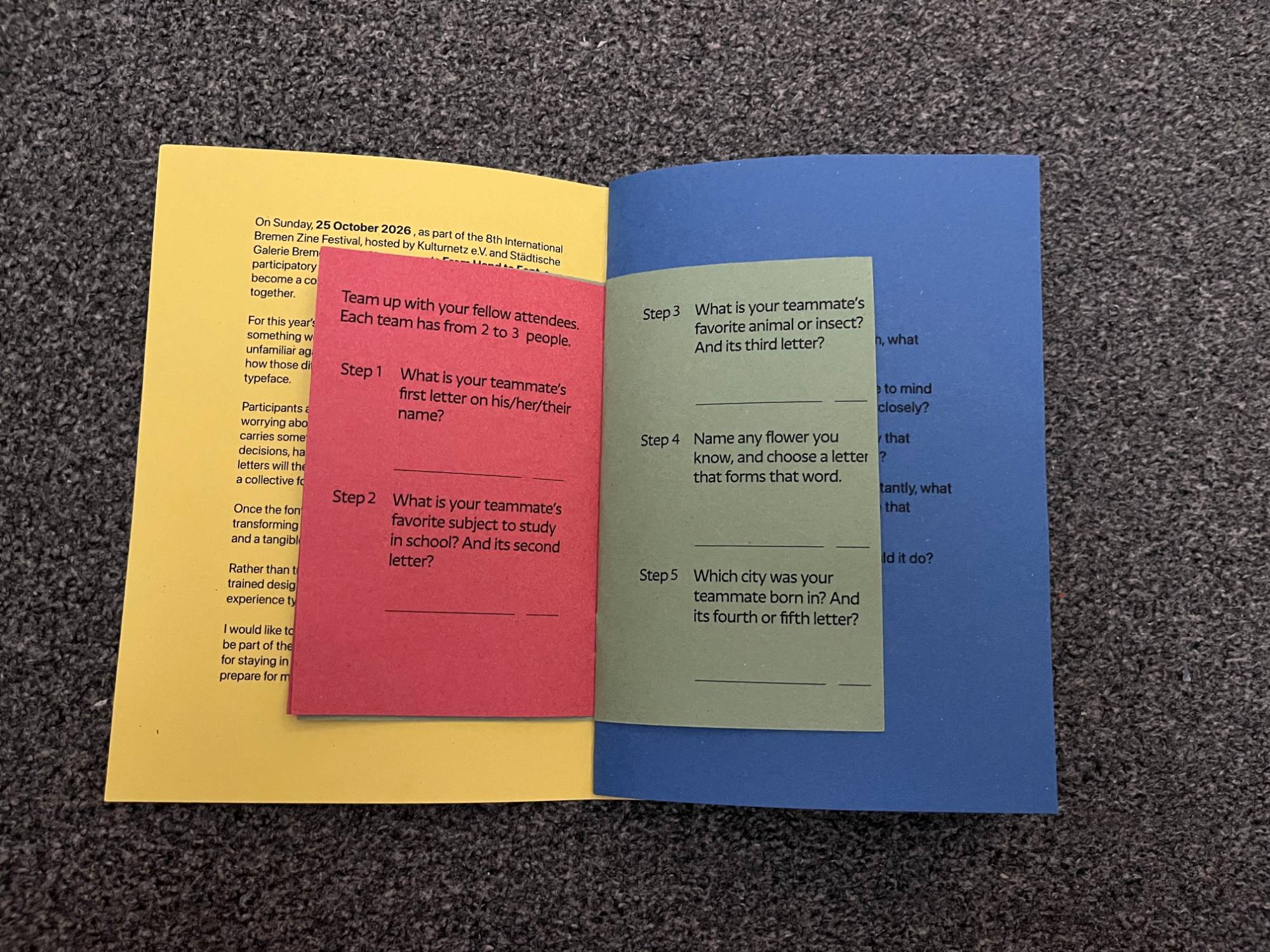
The earlier zine for Raw Edge Festival: an introduction to the project and a page of writing prompts, with nothing for participants to do while waiting Illustration, after: participants work on a typography activity while the printing continues. The later zine for Bremen Zine Festival with an activity booklet inserted: teams of two or three pick letters from a teammate’s name, favourite subject, animal, a flower and their birth city
Finding 03
Giving participants control over submissions
FindingIt was sometimes unclear which letter a drawing represented—for example, an uppercase “M” or a lowercase “m.” Manually uploading each participant’s drawing also pulled my attention away from facilitating the workshop and observing their reactions.
ChangeI built a local Python server and a mobile upload flow so participants could submit their drawings directly from their phones and preview the processed images.
How I used AI

I connected REA to Codex and used it to adapt image-processing techniques from the free features of a scanning app, integrating them into my existing front end. With no prior backend experience, I also worked with Claude through an iterative conversation to build a local Python server that supported mobile submissions during workshops.

How the local server works
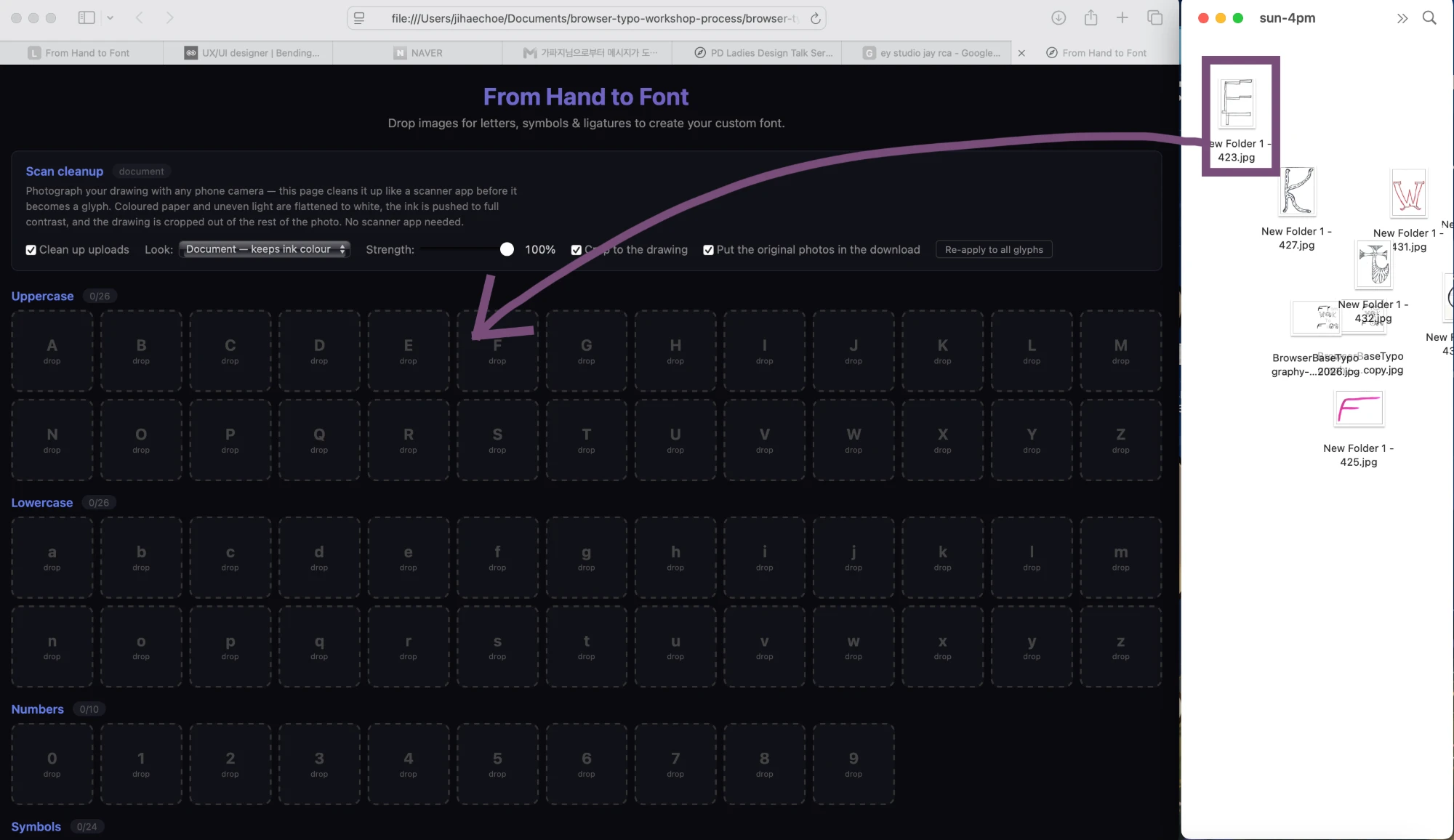
OutcomeA single 30-second demonstration replaced around 20 minutes of manual uploading per workshop, giving me more time to observe participants’ reactions and support their experience.
Before
Photos of participants’ letters sit in a laptop folder and are dragged one by one onto the letter slots in the web app
After
Poster
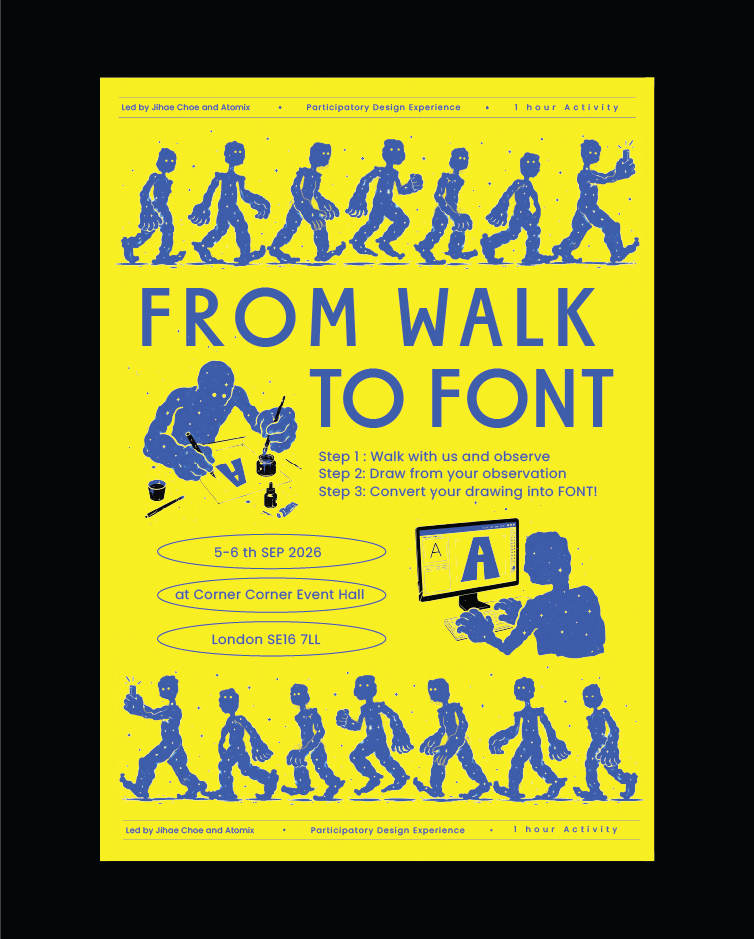
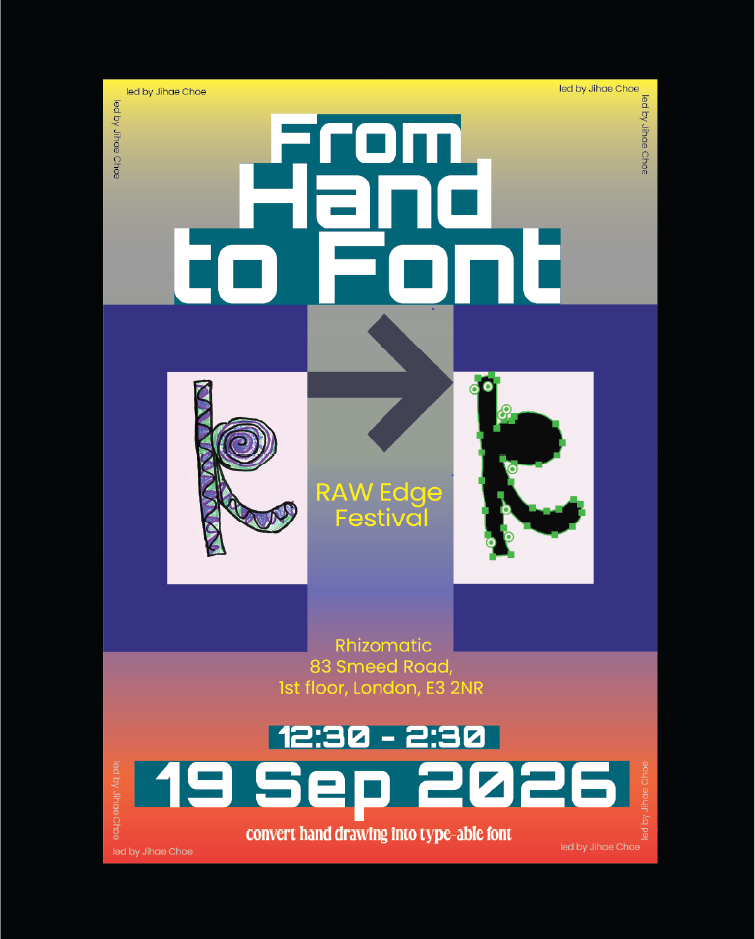
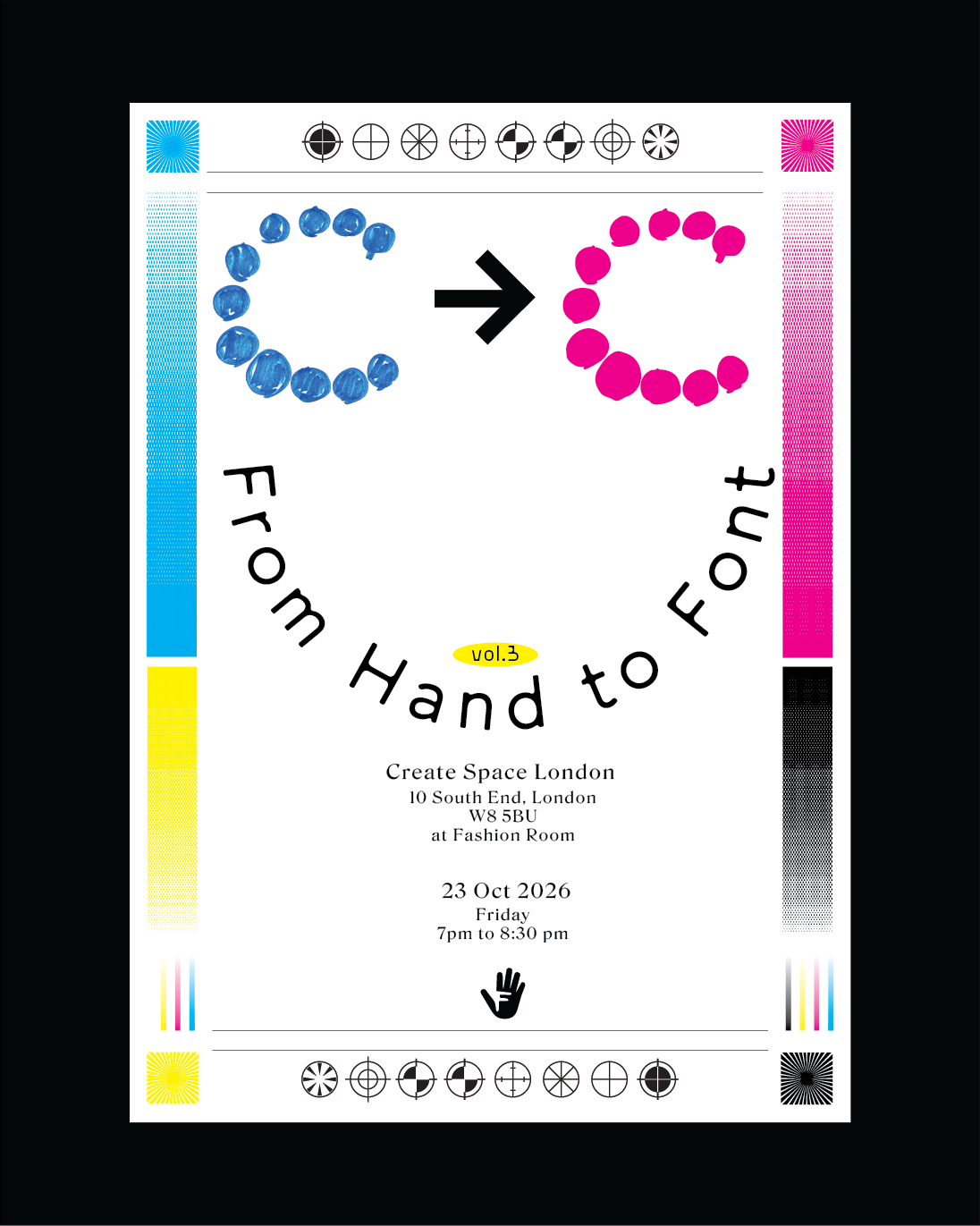
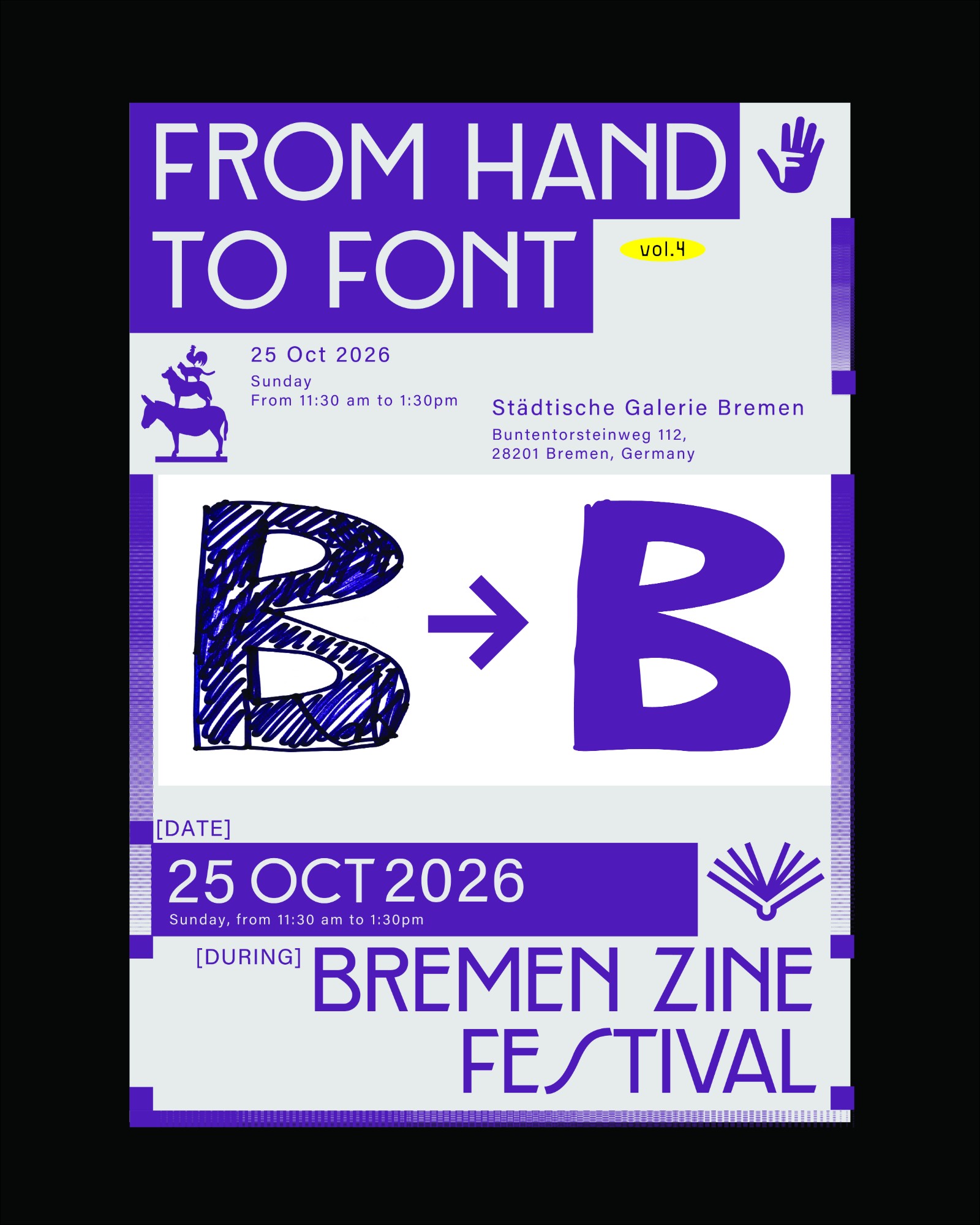
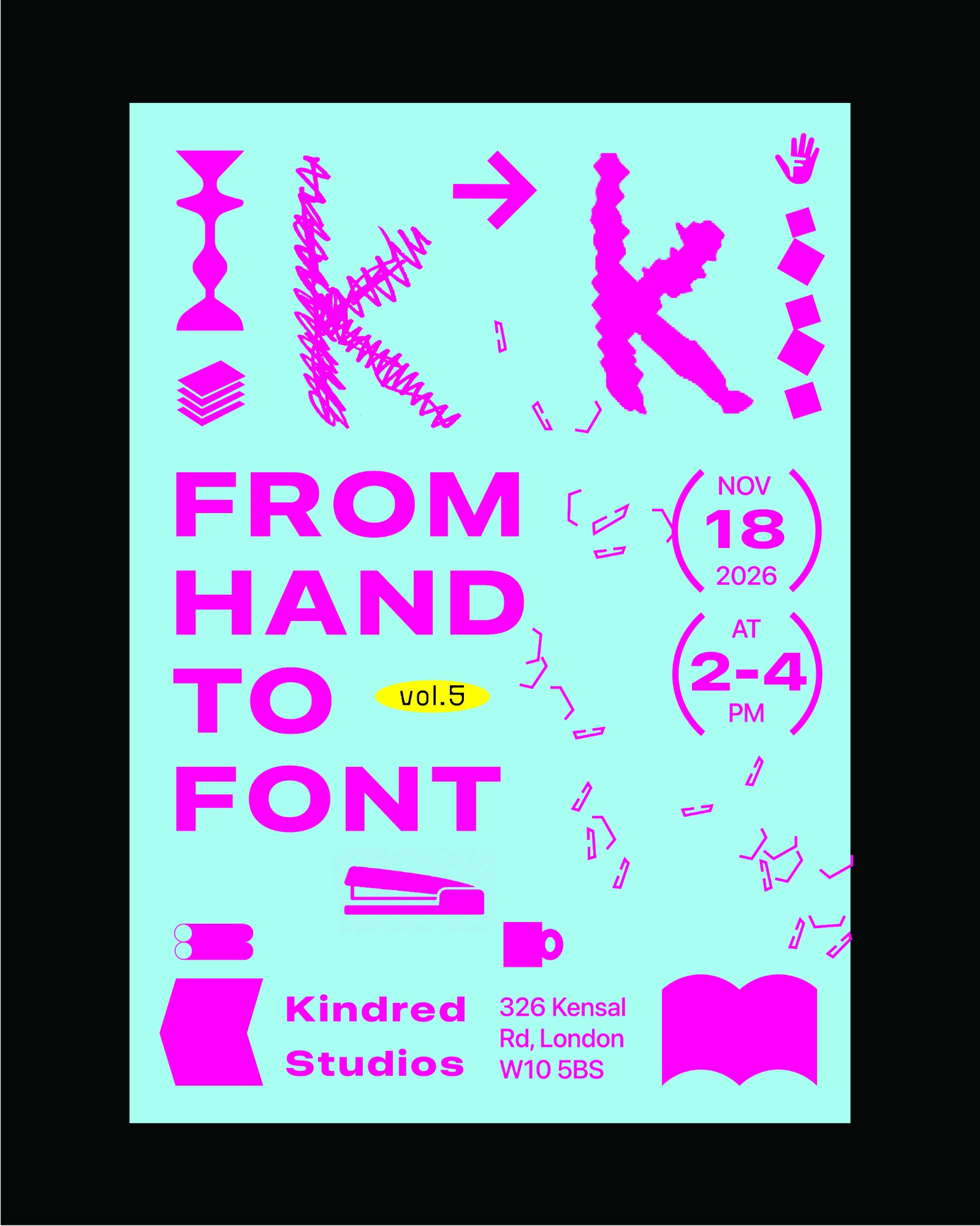
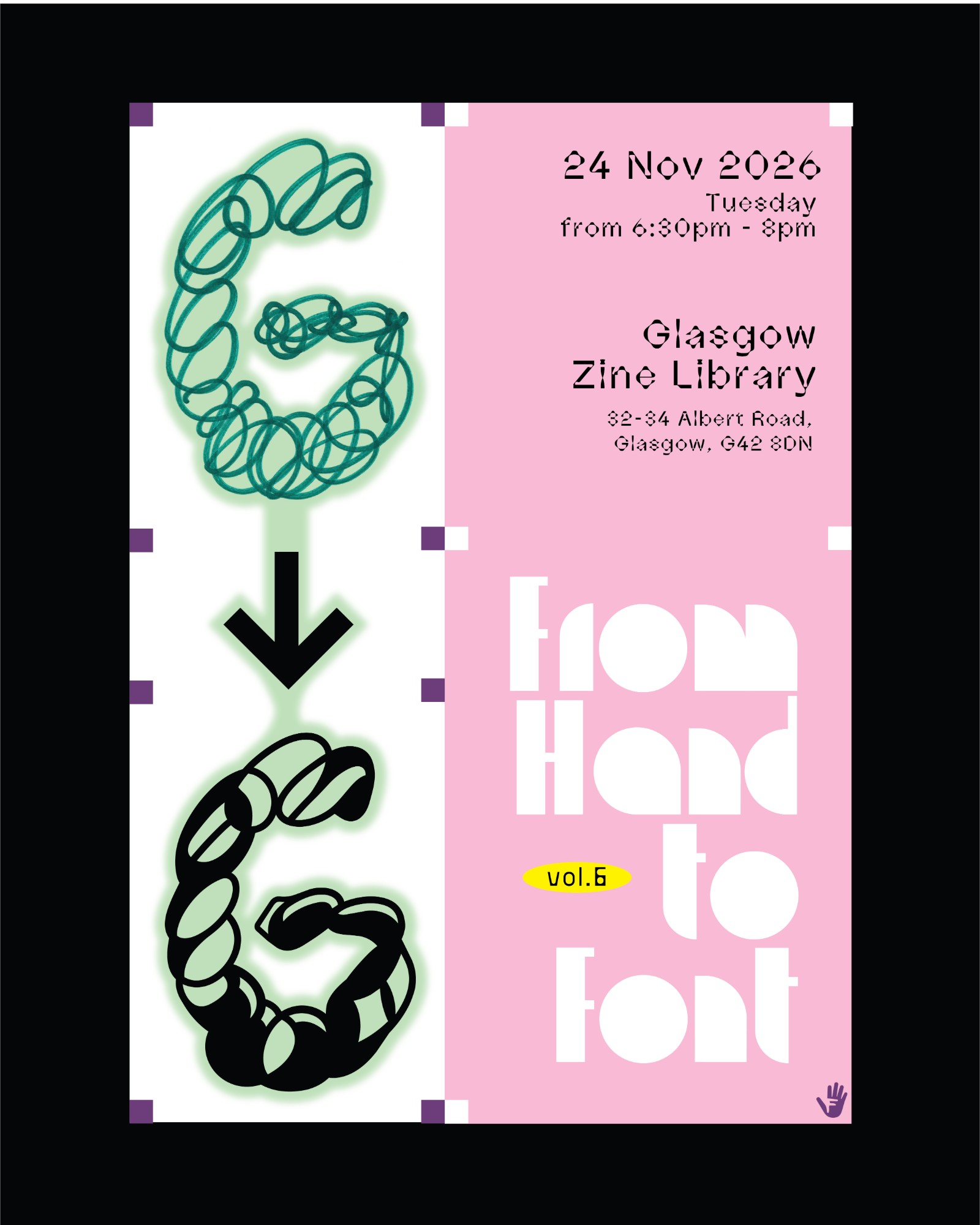
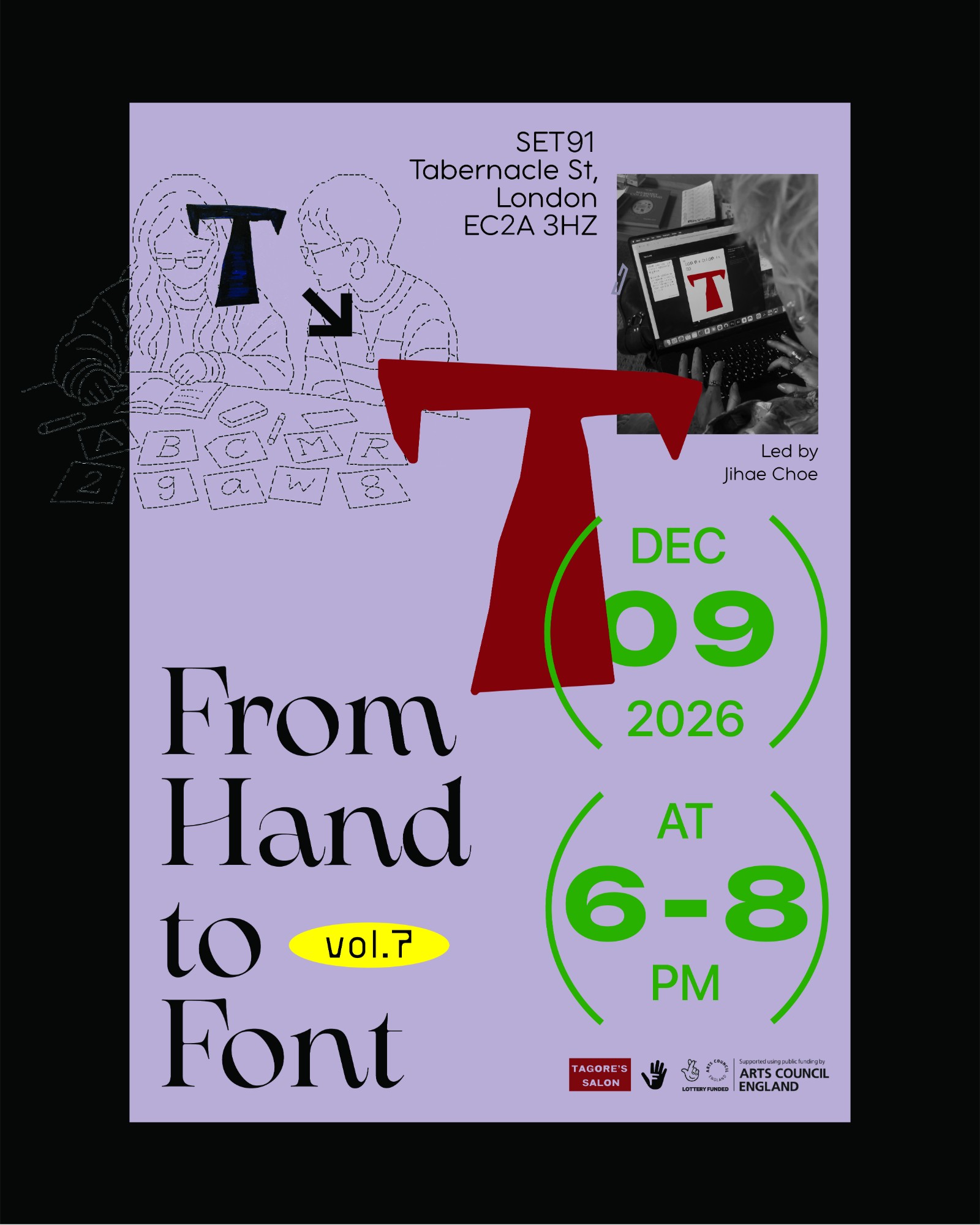
From Walk to Font poster: blue walking figures on yellow, 5–6 Sep 2026 at Corner Corner Event Hall, London From Hand to Font poster for RAW Edge Festival: a hand-drawn letter turning into a vector glyph, 19 Sep 2026 at Rhizomatic, London From Hand to Font vol.3 poster: a blue hand-drawn C becoming a pink font C, 23 Oct 2026 at Create Space London From Hand to Font vol.4 poster: a scribbled B becoming a solid purple B, 25 Oct 2026 during Bremen Zine Festival From Hand to Font vol.5 poster: a scribbled pink K becoming a font K on mint, 18 Nov 2026 at Kindred Studios, London From Hand to Font vol.6 poster: a looped green G becoming a bold G, 24 Nov 2026 at Glasgow Zine Library From Hand to Font vol.7 poster: a hand-drawn T becoming a red font T, 9 Dec 2026 at SET91, London
Reflection

However, the setup still requires everyone to be on the same Wi-Fi. When a venue does not provide Wi-Fi, I use my mobile hotspot, which currently supports only my laptop and three participants’ phones at a time. My next step is to adapt the code and move to an online server so participants can join using their own mobile data, without needing to be on the same Wi-Fi.

Get in touch at studiokiiowork@gmail.com to arrange a workshop for your team.